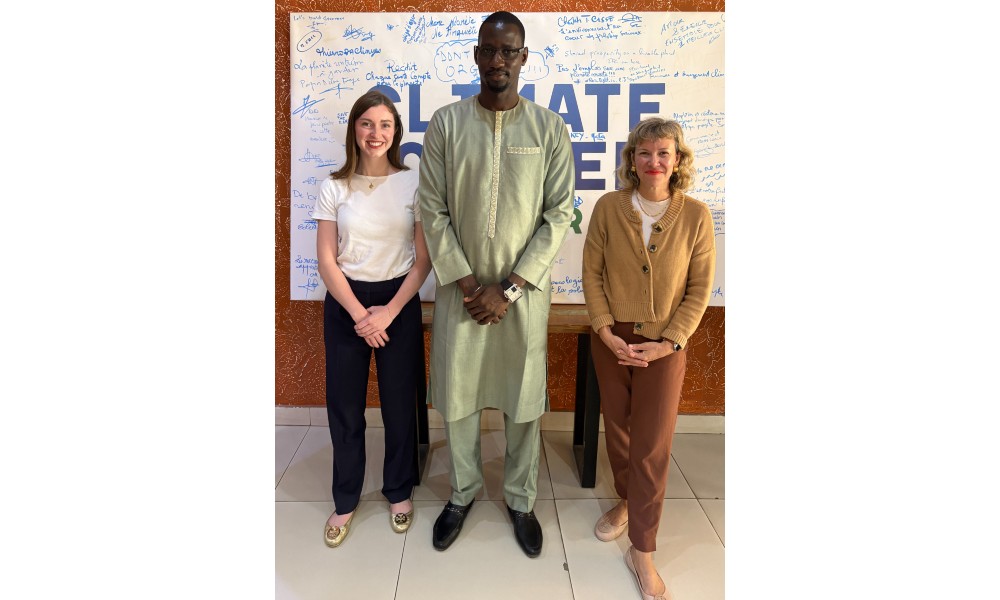
In April, we traveled to Dakar, Senegal, as part of our ongoing work examining the relationship between regime type and governance outcomes. In interviews with academics, former officials, and members of civil society, we found a country that has weathered challenges far more successfully than many of its neighbors, with a resilient democracy and well-functioning state.
Today, Senegal is in the midst of what appears to outsiders as a political crisis. President Bassirou Diomaye Faye and Prime Minister Ousmane Sonko, both of whom were jailed by the previous administration on what many deem to be politically motivated charges, have quickly drifted apart in real and meaningful ways since founding the PASTEF (African Patriots of Senegal for Work, Ethics and Fraternity) party and later taking office. Among their disagreements is whether Senegal should work with the International Monetary Fund (IMF) amid a ballooning debt crisis.
Sonko, the party’s popular revolutionary, has grown increasingly vocal in his critiques of Faye. Faye must decide whether to sign an electoral reform bill that would clear the way for Sonko to run for president in 2029—ostensibly deciding his friend-turned-rival’s political future. However, one of the civil society activists we spoke with brushed off the conflict as “just politics and rumors,” while a political scientist noted that people have trust in Senegalese institutions to overcome this challenge and emphasized that democracy is “not an event, but a process.”
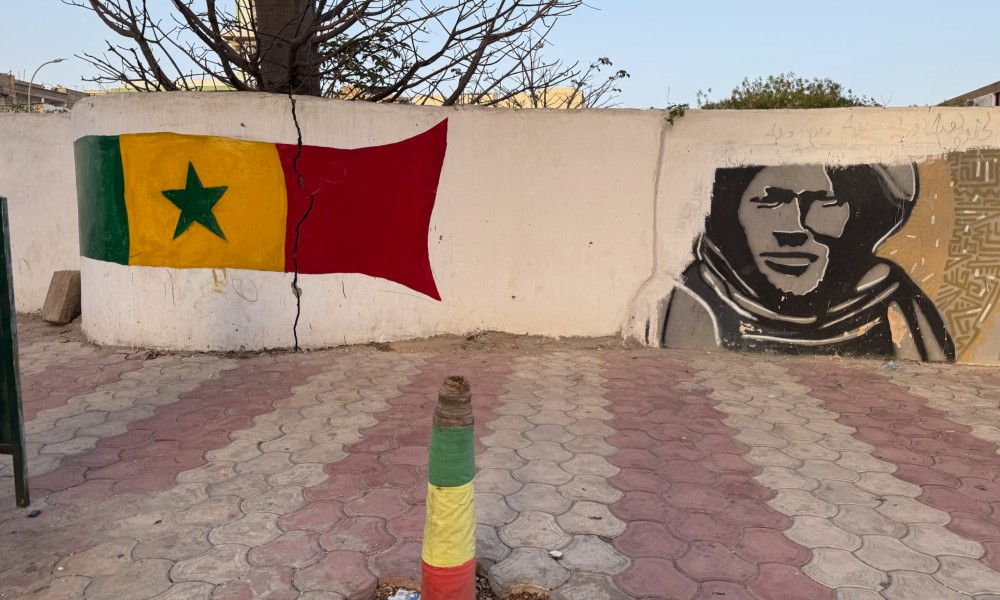
A mural in Dakar that depicts Cheikh Ibrahima Fall, a revered Sufi leader who helped define Senegal’s spiritual, political, and economic independence from France in the early 1900s. (Photo by Sarah Yerkes)
The trust in Senegal’s democracy that was expressed by many of our interlocutors is perhaps not surprising, given the resilience of the political system since its independence from France in 1960—and despite overcoming a dark history as one of the first and most active hubs of the Atlantic slave trade. During the 2000s, as Senegal began its democratic transition, former presidents Abdoulaye Wade and Macky Sall each attempted to consolidate their power and roll back democratic progress but faced real and serious pushback. Political and civil society leaders today continue to devise mechanisms to guard against future threats to the country’s democracy, including important transparency measures such as a landmark whistleblower protection law, an access to information law, and a national political dialogue on electoral reform.
Tumultuous politics have characterized Senegal’s neighborhood for the past several years. As a state in both West Africa and the Sahel, Senegal is unique in its avoidance of military coups and significant violence. As these maps show, Senegal is one of the only countries in Africa to not have a successful coup in the twentieth or twenty-first centuries and of the original fifteen members of the Economic Community of West African States, Senegal is among few that today can claim stability. As one interlocutor said, “Senegal is the heart of institutional stability in the region.”
What makes Senegal stand out particularly, when compared to its neighbors, is its commitment to robust, rights-oriented democracy. We witnessed and heard repeatedly from interlocutors about the well-functioning state system that helps guarantee rights. Freedom of expression is a key element of Senegalese democracy, as an interlocutor focused on media freedom and civil liberties generally described Senegal as having a “totally, totally open civic space.” An academic depicted strong electoral freedom, noting in Senegal “elections are windows for democracy to breathe,” and that “people have trust in electoral rules.” Speaking to the value citizens place on maintaining their democracy, a civil society activist told us that “people value their opinions more than bread.”
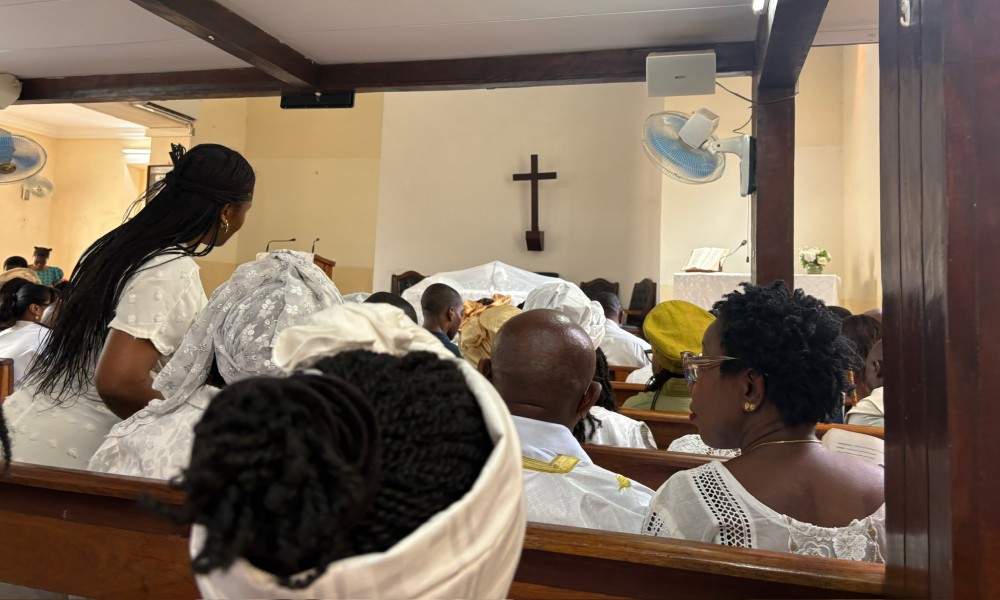
Inside a Protestant church on Easter Sunday. (Photo by Natalie Triche)
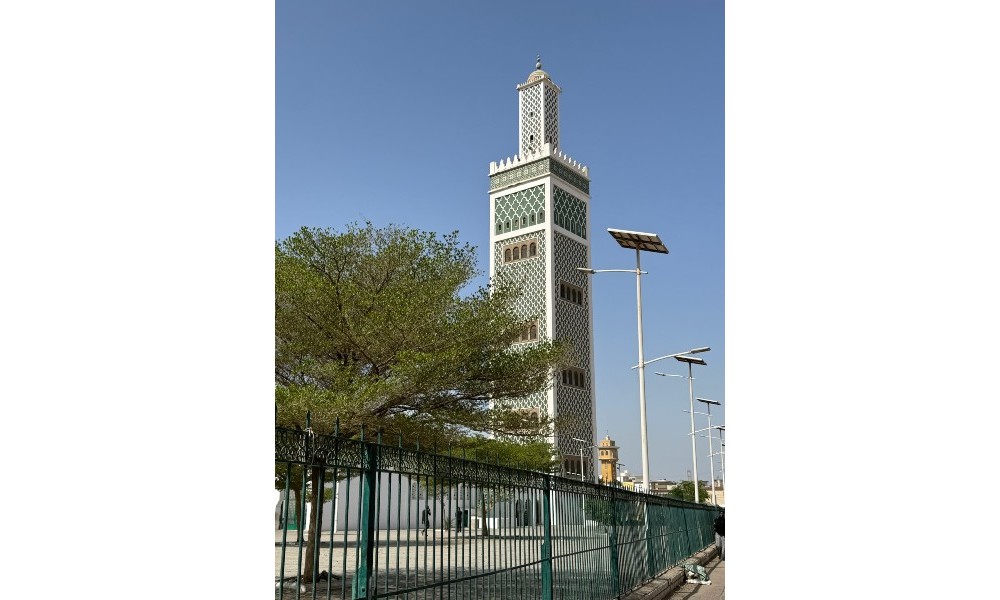
The minaret of the Grand Mosque in Dakar. (Photo by Sarah Yerkes)
Although the country is home to more than twenty ethnic groups, there is little social tension. Furthermore, despite being 95 percent Muslim, the Christian minority population is able to worship openly. Our visit coincided with Easter Sunday. Finding a church to attend was easy, as several had their doors wide open and worship music pouring into the street—evidencing how freely the Christian minority practices.
Another example of social cohesion we saw was when our translator and an interlocutor began joking with each other about their last names. The two came from two different tribal groups, and they explained the tradition between their two tribes to tease each other to show friendliness. In a region struggling with religious and ethnic violence, Senegal’s peaceful society is exceptional.
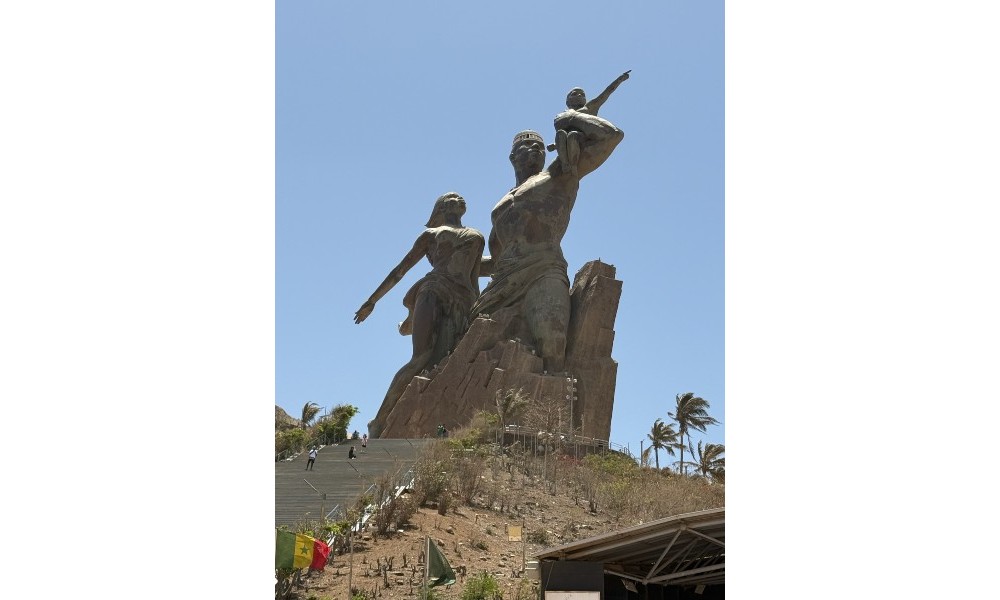
African Renaissance Monument in Dakar. (Photo by Sarah Yerkes)
From developing infrastructure celebrating Africa (such as in the photo above) to hosting the 2026 Youth Olympics—the first time an Olympic event will be held in Africa— Senegal is elevating itself to the position of regional leader.
Despite political progress, Senegal faces many challenges, including economic downturns, high youth unemployment, significant outward migration, and gender inequality. Senegal’s economy has grown tremendously over the past several years, largely due to the expansion of the oil and gas sector. However, the economic liberalization of Senegal is an ongoing project that faces significant hurdles, including massive debt, corrupt spending, slow bureaucracy, and high taxes for businesses operating in the formal sector.
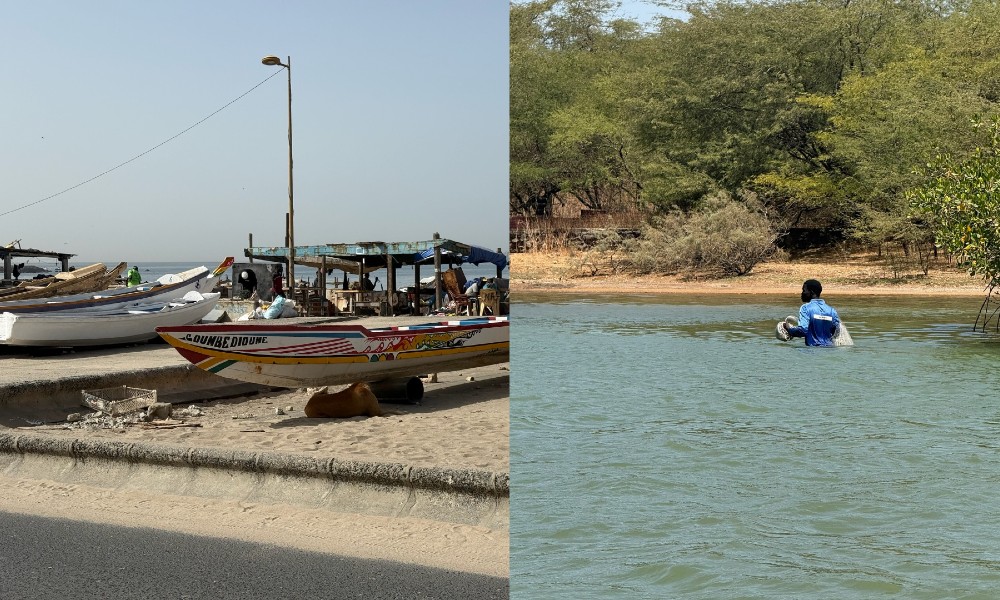
On the left, fishing boats on the shore in Dakar next to the Soumbedioune fish market. On the right, a man fishing by hand with a net in the Somone Lagoon. (Photos by Sarah Yerkes)
The Senegalese labor market is one of the most rigid in the world. The economy is estimated to be 97 percent informal, which has posed challenges to the national government’s economic strategies and efforts to protect workers. As one of our interviewees told us, “What you will be eating tomorrow, you earn today,” reflecting the reliance on the informal sector.
One of the key areas of the informal sector is artisanal fishing. A symbol of the nation, pirogue boats, pictured above, are handcrafted and painted before being deployed to sea. Their catch accounts for an estimated 43 percent of the national protein intake. Unsustainable fishing at commercial fisheries has threatened the local artisanal fishing markets in recent years. The Senegalese government has been working with international organizations to strengthen the fishing industry governance, especially coordinating with the African Confederation of Professional Organizations of Artisanal Fisheries to develop solutions.
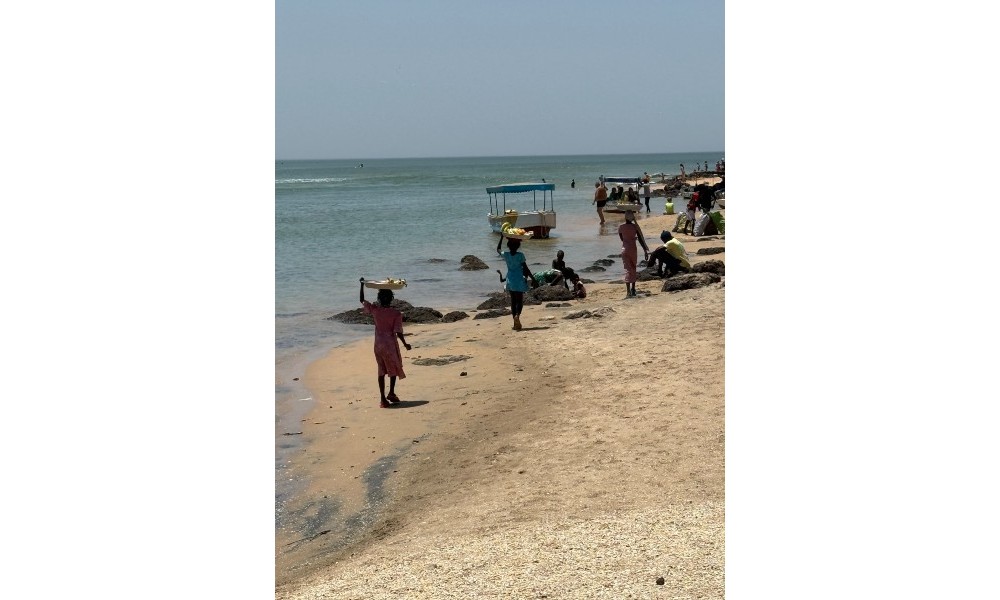
Women selling fruit along the beach in Somone. (Photo by Sarah Yerkes)
Another important and historical industry is peanuts, which at one point made up 60 percent of Senegal’s GDP and 80 percent of its export earnings. Although the economy is now significantly more diverse, peanuts are still a point of national pride and a staple of the agriculture industry.
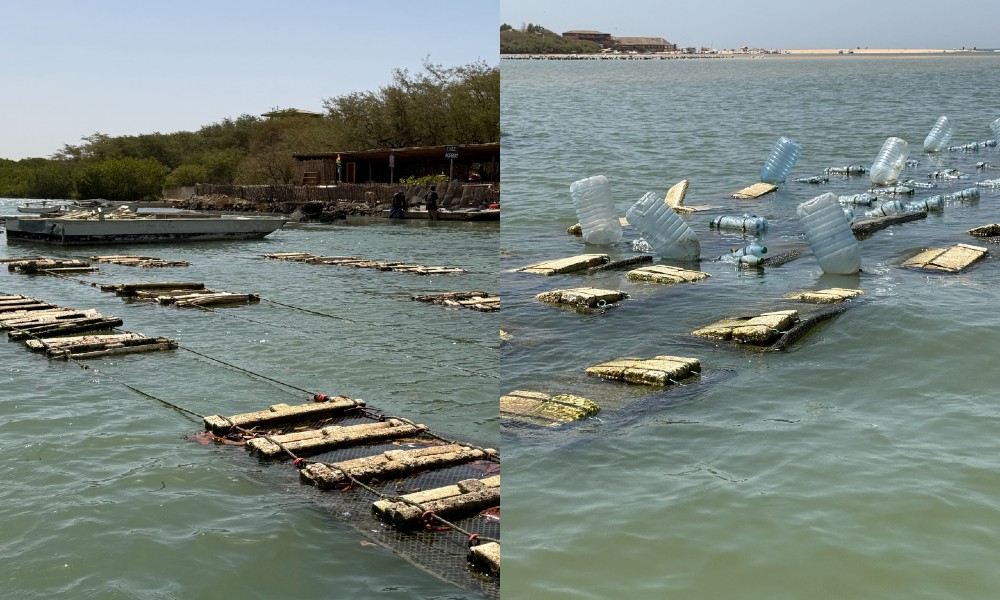
Two distinct types of oyster farming in Somone Lagoon: French oyster beds (left) and local oyster beds. (Photos by Sarah Yerkes)
On a boat ride through the Somone Lagoon, about ninety minutes south of Dakar, we were fascinated to see two different types of oyster farms within the same space. France sends its small oysters to the salty waters of the lagoon to grow larger and then ships them back to France for sale. Senegal also grows indigenous oysters, both for local and export consumption.
Oyster farming is taking off as an industry in Senegal, and it’s an occupation that especially benefits women, who make up around 90 percent of oyster farmers. International governmental organizations have been cooperating with local organizations to establish programs that provide women with the necessary tools and skills for oyster farming, which can be an arduous task. Women have also organized themselves into cooperatives to share resources and labor, as well as to collectively negotiate prices and access to markets—all of which improve their economic standing.
This industry supports local communities economically while also improving the mangrove conditions—an important part of reducing environmental degradation and increasing carbon capture. Traditionally, oysters were scraped right off of mangrove roots, permanently damaging the trees. Today, structured oyster farms (as seen in the photos above) and restoring depleted mangrove forests has reduced pressure on the critical plants.
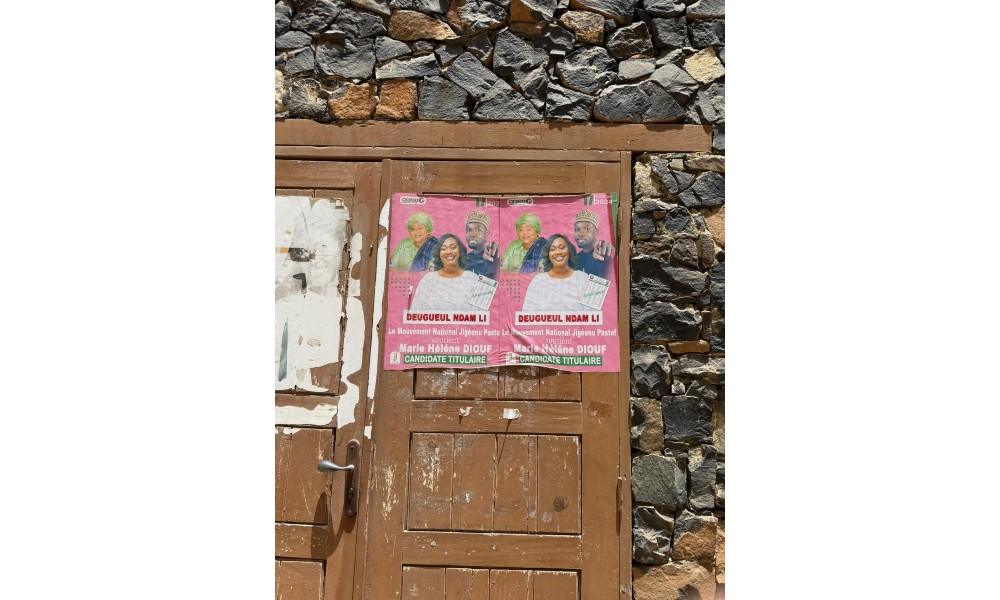
Parliamentary election candidate sign on Goree Island. (Photo by Sarah Yerkes)
Oyster farming is just one way Senegalese women have been resilient in the face of inequality. Women work with the government to enshrine their rights in laws too. Association des Juristes Sénégalaises (AJS) is a female rights association composed of legal advocates that was created in the 1970s following the adoption of a family code that did not regard the needs or rights of women, according to an interlocutor from AJS. When we sat down with her, she enumerated the myriad laws passed at the behest of female activists over the past twenty years that have resulted in a much more equal political culture for women. One standout is the 2010 law that requires gender parity in elective institutions, achieved via a list system. The results were immediate: In the 2012 national elections, the proportion of women in the National Assembly rose from 22.7 percent to 42.7 percent. Today, 41.2 percent of the representatives in the National Assembly are women.
Nevertheless, gender remains a category of inequality in Senegal, despite all the efforts and achievements realized by organizations such as AJS. Although the parity law was implemented in the National Assembly, it has not been disseminated throughout the other levels of government nor other executive bodies, such as the presidential cabinet. Further, rural women face greater barriers to accessing their rights due to a lack of education and ability of the government to implement laws effectively.
Additionally, the current government, despite its focus on equality, has failed to protect all minority groups. The week we arrived in Dakar, the president signed a law that the National Assembly passed unanimously that doubles the punishment for homosexual acts from five years’ imprisonment to ten. Although some of our interlocutors justified the law by pointing to Senegal’s “conservative culture” and explained that in other countries you will get “killed on the street” for being gay, Senegal has been condemned by both local and international human rights groups for its discrimination against sexual minorities.
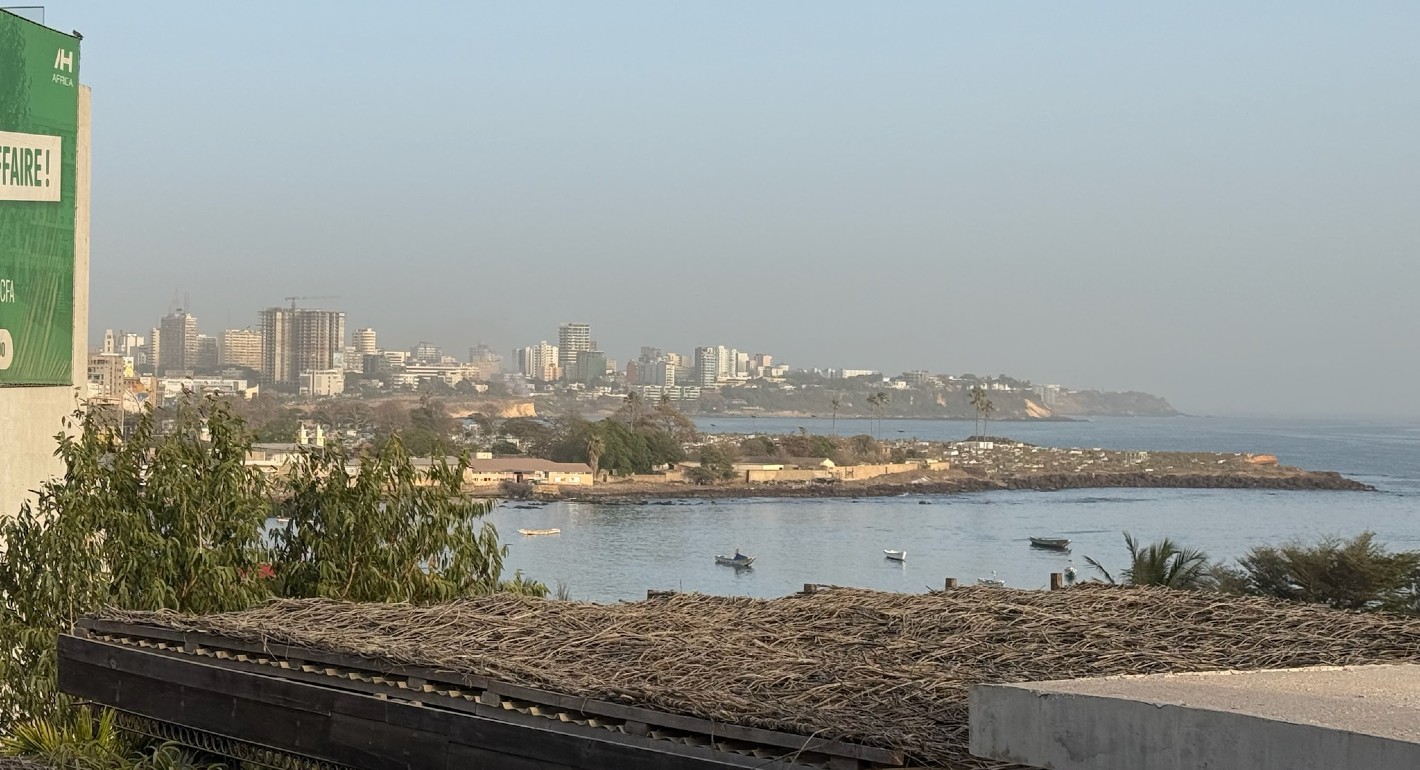
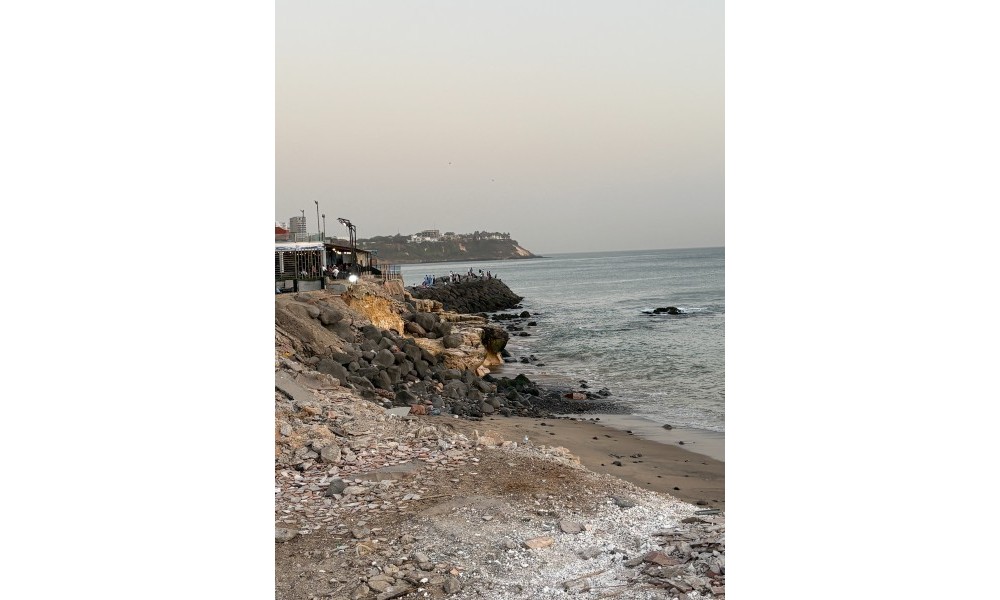
The coast in Dakar. (Photo by Natalie Triche)
Climate change is a significant issue in Senegal. Coastal erosion driven by climate change threatens vital economic infrastructure, including fishing docks, seafood processing plants, and homes along the coast. Working with international support, the Centre de Suivi Ecologique of Senegal is implementing a plan to adapt to coastal erosion. The government has been attempting to expand climate governance across industries, through national adaption plans that are targeted to specific industries. In April 2025, the government adopted one such plan for the agricultural sector, aiming to strengthen resilience. These efforts have been expanding but are still lacking in many sectors. Recent gas and oil industry expansion by the government has consequences for the environment, such as a 2025 gas leak at a British Petroleum field that garnered attention from artisan fisherman who are concerned about the fish disappearing from the pollution.
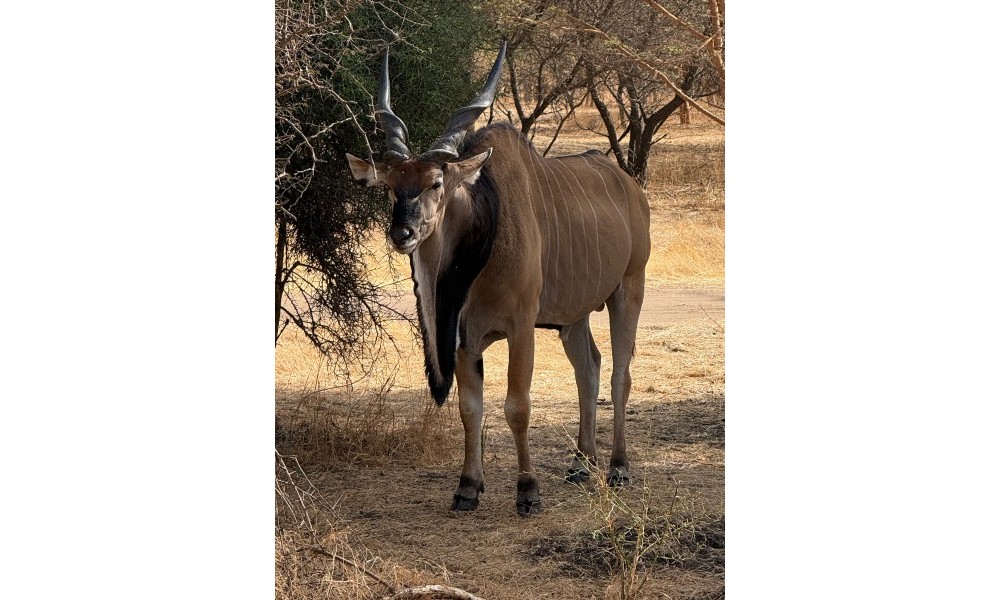
One of the world’s last remaining Western Derby elands. (Photo by Sarah Yerkes)
Another area where Senegal has taken on climate change is the Bandia Wildlife Reserve, about one hour from Dakar in the Thiès Region. Bandia was established in 1990 with the intent to reintroduce wildlife into the country that had been threatened or eradicated due to poaching and climate change. Through public-private cooperation, it is now home to numerous indigenous species, including the Western Derby eland—one of the most critically endangered animal species in the world. Bandia participates in a captive breeding program, and along with Fathala Reserve in Senegal, it has managed to grow a population of six elands to over 100.
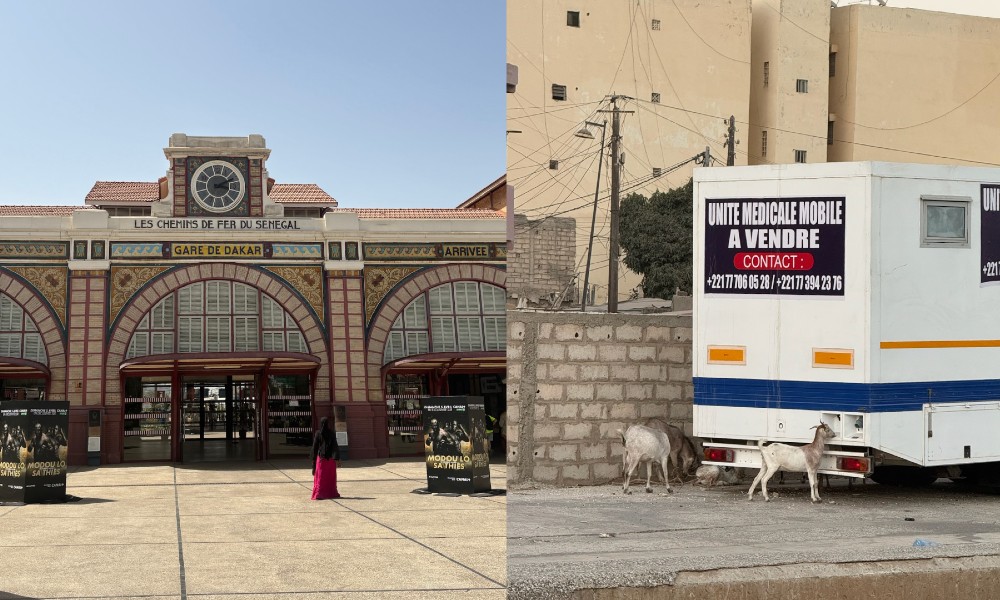
Left, the main train station in downtown Dakar. Right, goats drinking water from vehicle on the side of the road in downtown Dakar. (From left, photos by Natalie Triche and Sarah Yerkes)
The government’s ability to maintain and develop infrastructure is a positive element of Senegalese governance. Infrastructure functions well, roads are maintained, and the country outperforms many of its neighbors when it comes to health outcomes. Life expectancy, for instance, in Senegal is 67.8 years, compared to 63.6 years average across Africa. When we asked an interlocutor from a prominent civil society organization in Dakar what is going well about governance in Senegal, he said “everything runs well,” gesturing with his hands at the area around him.
However, the picture is not perfect. Trash and animals such as goats and stray dogs are prevalent in the streets. There are significant urban-rural divides, with those living furthest inland experiencing the lowest levels of access to clean water and adequate healthcare. The capacity of the healthcare system is low, with only 0.7 hospital beds per 1,000 people.
Meeting with an anti-corruption expert. (Photo by Hamade Ndiaye)
A positive element of Senegal’s governance is that it is responsive to the demands of the people. One of the biggest issues—and, according to several of our interlocutors, the single biggest—is corruption. In 2025, after two decades of concerted efforts, the Senegalese National Assembly passed several watershed laws aimed at reducing corruption. They included a whistleblower protection law that is regarded as the first of its kind in Francophone Africa, as well as a bill that reformed the National Office for Combatting Fraud and Corruption, ultimately creating a new body. Another expands the scope of a 2014 anti-corruption law that required high-ranking government officials to declare their assets over 1 billion CFA francs (roughly $1.8 million U.S. dollars) to include a far greater number of officials, including judges, auditors, and heads of public companies.
Transparency International has improved Senegal’s rating by ten points over the past decade, raising from a thirty-six out of 100 in 2012 to a forty-six in 2025 and showing the positive trends to reduce corruption.
Although these legislative changes are significant, the extent to which they are being implemented successfully is unclear. To test the law on access to information, one interlocutor emailed nearly twenty government agencies to request information and is awaiting responses—a test of the government’s willingness to abide by its own new law.
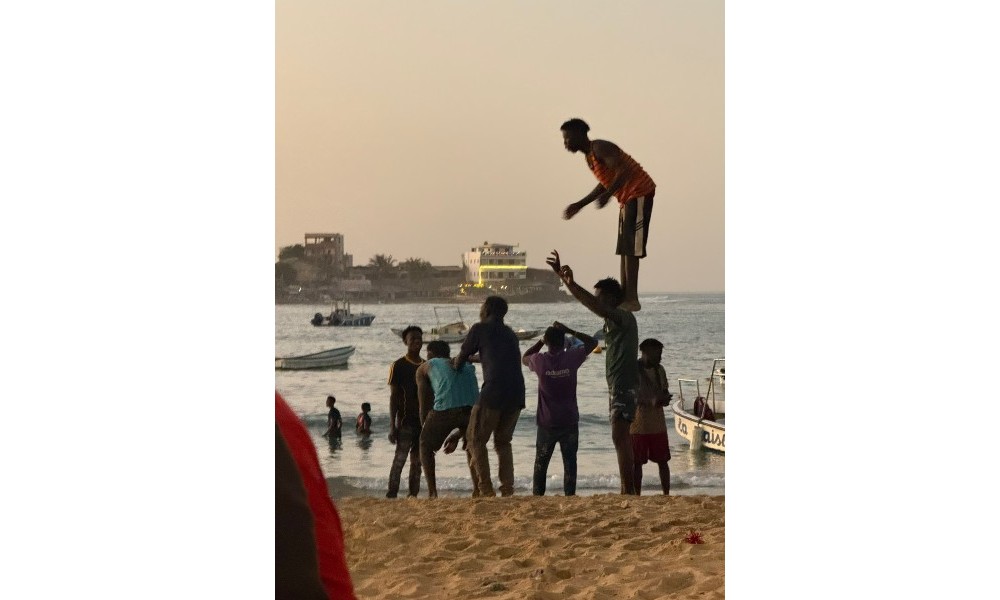
Senegalese teens wrap up their evening workout on the beach. (Photo by Sarah Yerkes)
In Dakar, interlocutors echoed one sentiment: Things work well in Senegal. The government responds to the needs of the people, and elections can be trusted to give people a voice. Economic challenges should not be discredited, and there is always space for reform across governance sectors, but Senegal embodies a resilient democracy that has learned from its difficult past and is working toward an even more dynamic future.
Sarah Yerkes is a senior fellow in Carnegie’s Middle East Program, where her research focuses on Tunisia’s political, economic, and security developments as well as state-society relations in the Middle East and North Africa.
Natalie Triche is a research assistant in the Carnegie Middle East Program. She was previously a James C. Gaither Junior Fellow in the Middle East Program.
Carnegie does not take institutional positions on public policy issues; the views represented herein are those of the author(s) and do not necessarily reflect the views of Carnegie, its staff, or its trustees.
More Work from Carnegie Endowment for International Peace
A partnership between India, a country of subcontinental size, and Africa, a continent of fifty-four countries, may seem asymmetric until one notes that both are home to nearly the same number of people—1.4 billion. This essay spells out the existing challenges to the partnership, its optimal potential, and the possible pathways to realize it over the next quarter-century.
The cost of air defense has become an unregistered tax on revenue for businesses. While military rents are consolidated in the federal budget, the costs of defense are being spread across the balance sheets of companies and regional governments.
Cities across the United States facilitate investment in American communities. Yet, because global attention remains focused on U.S. trade policy, their distinctive and bold local approaches to international trade and investment promotion are often underappreciated.